A Journey into the Future · Chapter 4 of 7
Time Machine 2019
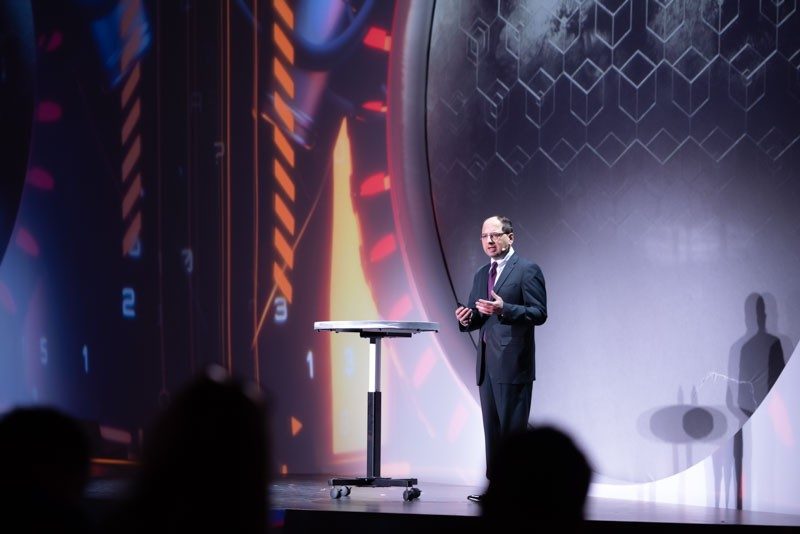
The futuristic aesthetic of Time Machine 2019.
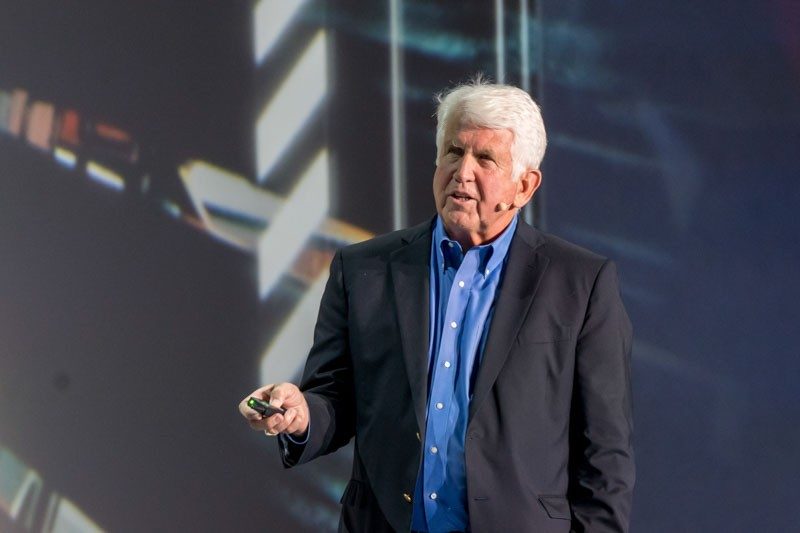
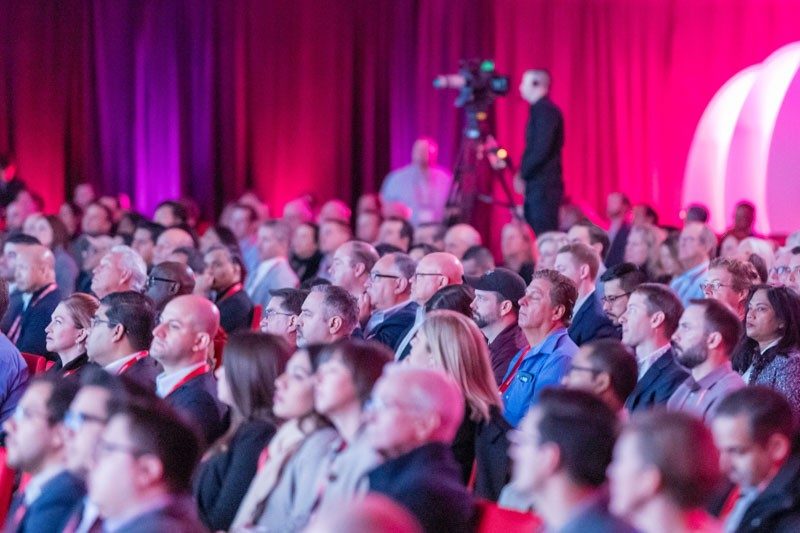
Time Machine 2019, SparkCognition’s annual AI summit, was one for the books. The global AI conference featured 40+ leaders across a wide spectrum of industries to discuss the implications of AI. At our 2019 conference the ideas that were discussed have been unfolding and will continue to reverberate for many years.
Here’s a rundown of some of the biggest, most important ideas that emerged over the course of Time Machine 2019:
Many Current Systems Will Not Be Able to Scale Into the Future
The infrastructure that powers our society is beginning to reach a breaking point. The population is growing, as is the importance of technology in our daily lives, but our current infrastructure isn’t going to be able to scale with it.
Jon Damush, the Director of Boeing NeXt, described the fragility of our current airspace management system—with passenger travel expected to double in the next 15 years, plus the growing prevalence of unmanned drones, the future of air traffic will be too large for human controllers to safely manage the skies. Ford Motor Company’s Bill Frykman echoed these worries on the ground, where city roads, curbs, and general mobility access are already stretched far too thin. On a cybersecurity panel, speakers were in agreement that the threat landscape is growing too quickly for humans to keep up with. And Andrea Thomaz, CEO of Diligent Robotics, expressed her concern over the growing shortages and burnout of personnel in the healthcare industry.
The overall message was clear: the status quo is simply not sustainable, and an AI-powered future is the only way forward to take these pressures off our critical systems and enable them to scale with us.
AI’s Impact on Jobs Is More Complex than Most Realize
Obviously, many are worried that AI is going to automate away their jobs. Conversely, some have argued that there’s nothing to worry about because AI will create more jobs than it eliminates. The speakers at Time Machine 2019 painted a more nuanced picture. As the energy industry panel explained, the goal of automation is not to reduce the workforce, but to enhance human performance and eliminate human error. Technology can’t replace expert personnel, and will in fact require experts to guide it.
Admiral Bobby R. Inman, USN (Ret.), confirmed that AI will create new jobs, but with the caveat that people will need different kinds of training and education for those jobs. The U.S. has historically treated education as a state and local matter, but Admiral Inman warned that to be ready for the AI revolution, education needs to be addressed at a national level as well. And Norman Morgan, head of the robotics program at Eanes ISD, offered an inside perspective, explaining that the younger generation is going to embrace robots and AI, but that schools need to do a better job of offering computer science and robotics programs.
AI and Digital Transformation Have to Be about People
Despite the stereotype, a good digital transformation can’t be all cold, unfeeling machines. The panel on the new digital ecosystem discussed this in depth, declaring that a genuine, successful digital transformation is not just a technology shift, but a culture shift, born out of a “customer obsession” and a desire to make things easier for both organization personnel and clients or customers.
The healthcare panel spent time on this topic as well, expressing the hope that by having more machines to automate the quantitative end of medicine, human doctors might start placing more emphasis on empathy and human interaction.
According to Dr. Will Roper of the US Air Force, even the Pentagon is realizing this, and the Department of Defense is trying to shift their culture to better accommodate technological innovation: more delegating of authority, more rewards for taking risks, and a better relationship with private tech startups.
AI Won’t Always Be Easy, but the Rewards Are worth the Challenges
Perhaps the most prevailing theme of day one of Time Machine was that AI isn’t always easy, and technological disruption might be fraught with roadblocks. There are still technological quandaries, and successful AI implementation in business can be a minefield. There are also deeper issues that need to be addressed, like how to maintain privacy when our technology needs our data to run, or what to do about the systemic biases AI systems inherit from human data.
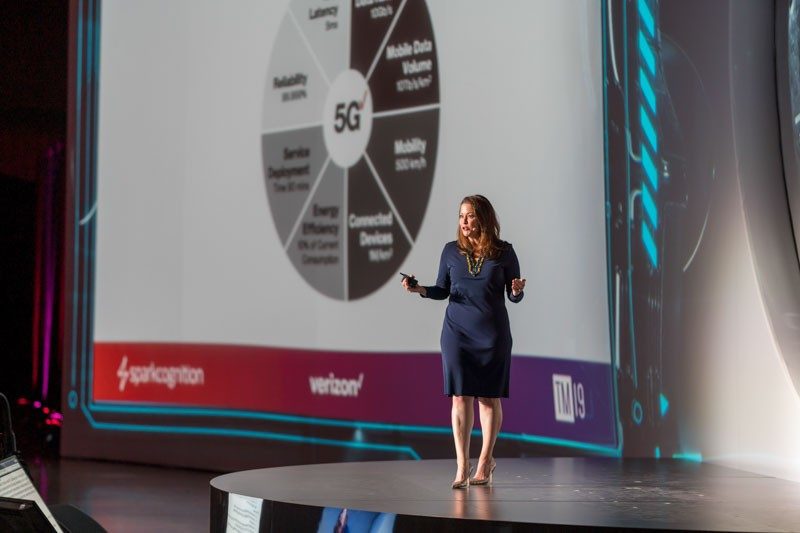
But we need to start grappling with those challenges now, not just to keep from falling behind, but because AI has an incredible potential to be a force for good. Crystal Wang, the CEO of the Newland Group, presented a powerful message of unity, and how technology can bring the US and China together rather than further apart. Elise Neel of Verizon proclaimed that we as a society are at a turning point, and the power to shape our collective future is in our hands.
The Transformative Power of Risk-Taking
Former CEO of Cisco John Chambers set the tone for day two during his captivating keynote by stating that “We’re in an environment you disrupt or you get disrupted yourself.” This level of brutal honesty is necessary when your industry is on the cusp of a major market transition, and who better than the master of market transitions to help you kick things into gear?
With a major technological movement taking place almost every 10 years, how can companies get comfortable with the pace of change? In his keynote, Chambers stated that “Doing the right thing for too long is what gets you in more trouble than taking risks.” He reiterated the importance of companies having a culture that embraces risks as opportunities and lessons learned, further emphasizing that how you handle your setbacks is just as important as how you handle your successes.
On a panel titled Investing in Future Tech, Rumi Morales of Outlier Ventures argued that a lot of transformational bets do not happen during times of economic growth, leading many companies to dodge AI solutions altogether. She wants to see more companies taking larger bets on larger transformations while considering the impact AI will have on future industries.
Discussing AI innovation within the DoD, Greg Allen of the Joint Artificial Intelligence Center (JAIC) talked about how the department has embraced the unfamiliar. The department is currently working with extraordinary amounts of data, mature AI technology, and a partner to help test a pilot program for identifying wildfires, and he believes this is an excellent learning opportunity for the department.
Ultimately, facing the fear of uncertainty head-on is essential to turning ideas into reality.
The Importance of Taking Action
Regardless of the industry in question, the speed of innovation is critical. Oil and gas companies, in particular, have been slower to take advantage of digital tools in daily operations. In an oil and gas panel, Ken Topolinsky of Hunt Oil Company noted the importance of demographics, explaining that the segment of the workforce with five or less years of industry experience is far more open-minded and digital savvy compared to industry veterans. Geir Engdahl of Cognite said there is a lot of interest and proof of concepts, but actually putting things into production and scaling is much rarer.
On the national security front, Former Deputy Secretary of Defense Bob Work echoed General Tony Thomas’ sentiments that the US Department of Defense is behind, suggesting that we’ve lost two years despite having a national defense strategy with AI and machine learning being top priorities. He elaborated that there was no clear signal from the top that the department was going to devote time, money, and energy to AI research and development in the near future. However, US Defense Secretary Mark Esper recently declared to the National Security Commission on Artificial Intelligence that AI was his number one priority, and Secretary Work anticipates an acceleration in departmental efforts following Esper’s comments.
In the age of Artificial Intelligence, change and success is an ongoing process that requires companies from top to bottom to take action and commit.
Learning Through Trial and Error
John Chambers’ parting words for day two attendees were to imagine what’s possible and to follow your dreams, and when you get knocked down, “Don’t jump right back up! Understand why you got knocked down, and view that as a red badge of courage.” He claims the average startup has people that have been in three to five companies, almost all of them experiencing setbacks and getting knocked down. But that didn’t stop them from chasing innovation.
Amir Husain, in his closing presentation, further emphasized the power of learning through trial and error. On one of his final slides, he outlined four critical steps in the cycle: 1) Perception; 2) Decision; 3) Action; and 4) Learning. Once key takeaways are gathered, the cycle begins again until more robust solutions are found. Trial-and-error advances critical thinking, problem-solving abilities, and a willingness to take more risks to find the best solutions possible. Each of these components are crucial to maintaining a competitive edge in the global AI race.
Day two of Time Machine 2019 provided our audience with one key takeaway: Ideas mean nothing without action. AI comes packaged with lots of hype and promises, but it won’t live to up to its true potential unless companies, from leadership teams to associates, turn their collective vision into reality.
Photographs